The AI Energy Paradox — AI was built to optimize efficiency—yet it is paradoxically becoming one of the largest energy consumers on earth. Training a single LLM costs tens of GWh; each inference draws 10× the power of a conventional search. By 2030, data centers could consume close to 9% of U.S. electricity—roughly 3% of global supply. The root of this challenge is thermal—multi-phase flow heat transfer is the bottleneck at every stage of power generation, storage, and consumption. MFTEL tackles this barrier on three fronts.
Thermal energy storage bridges the gap between intermittent renewable supply and constant data center demand. By storing excess energy as heat and converting it back to electricity on demand, Carnot batteries ensure grid stability without fossil backup.
Energy Conversion Process
01
Excess Renewable
Solar / Wind surplus
→
02
Store as Heat
High-temp thermal tank
→
03
Heat → Electricity
Heat engine cycle
→
04
Stable Power
24/7 data center supply
Key Metrics
10+h
Storage duration
60%+
Round-trip efficiency
30+yr
Plant lifetime
↓$/kWh
Cost reduction
Intermittency of renewables is the greatest challenge for data center operations. Carnot batteries enable large-scale, long-duration storage compared to Li-ion, and can repurpose existing power plant infrastructure—achieving both economic viability and scalability.
MFTEL Research Activities
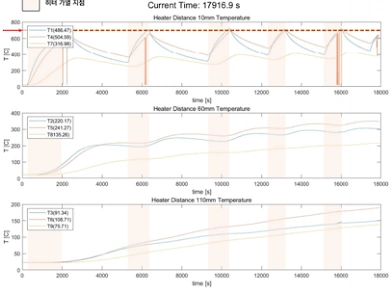
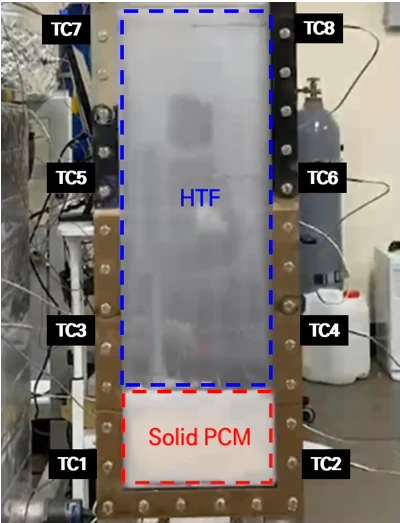
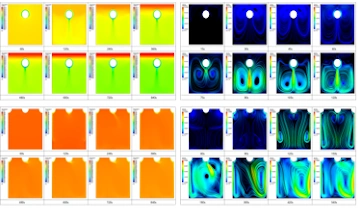
Direct-Contact Latent Heat Storage System
Dramatically improving heat transfer efficiency over indirect methods through direct contact between PCM and heat transfer fluid. Experimentally characterizing multi-phase flow phenomena during PCM melting and solidification in charge/discharge cycles.
NRF, 2023–2025
Sand Battery Thermal Energy Storage
A novel patented sand battery concept using sand as a high-temperature thermal storage medium. Enables large-scale heat storage with low-cost materials, with an integrated system including energy extraction methodology.
PATENT 10-2906225
Sustainable Energy Process Innovation
Cultivating next-generation thermal storage talent through the Digital-Based Sustainable Energy Process Innovation Convergence Graduate School program.
KETEP, 2023–2027
Lab-to-Startup TES Development
Scaling up laboratory-level thermal energy storage technology to startup level, validating commercialization potential through prototype development and testing.
MSIT STARTUP, 2025
FIG. 2.1 — THERMAL ENERGY STORAGE RESEARCH SUMMARY
02.2 — AI SEMICONDUCTOR COOLING
AI Semiconductor Cooling
Reducing Cooling Energy Consumption
~90%
cooling energy saved
Two-phase immersion cooling eliminates the need for traditional air cooling infrastructure, reducing cooling energy by up to 90%. Direct contact with dielectric fluid enables higher chip densities and removes the thermal bottleneck at the processor level.
How It Works
01
Fluid Submersion
Servers submerged in dielectric fluid
→
02
Two-Phase Boiling
Fluid boils, absorbing massive heat via latent heat
→
03
Condense & Recirculate
Vapor condenses, natural circulation loop
Air Cooling vs Immersion Cooling
Metric
Air
Immersion
Energy Efficiency (PUE)
1.3 – 1.5
1.02 – 1.05
Cooling Energy Share
30 – 40%
2 – 5%
Chip Heat Flux Limit
~10 W/cm²
~200 W/cm²
Server Density
6–8 kW/rack
50–100 kW/rack
As AI accelerators (GPUs, TPUs) exceed 700W TDP, air cooling alone cannot keep up. Two-phase boiling heat transfer handles 20× more heat per unit area than air, pushing data center PUE close to 1.0.
MFTEL Research Activities
EV Battery Immersion Cooling via Boiling
Fundamental research on electric vehicle battery cooling using insulating fluid boiling heat transfer. Dramatically improving cooling performance over conventional water-cooling while ensuring temperature uniformity at the battery pack level.
INHA UNIV., 2025
Metal Foam-Enhanced Boiling Heat Transfer
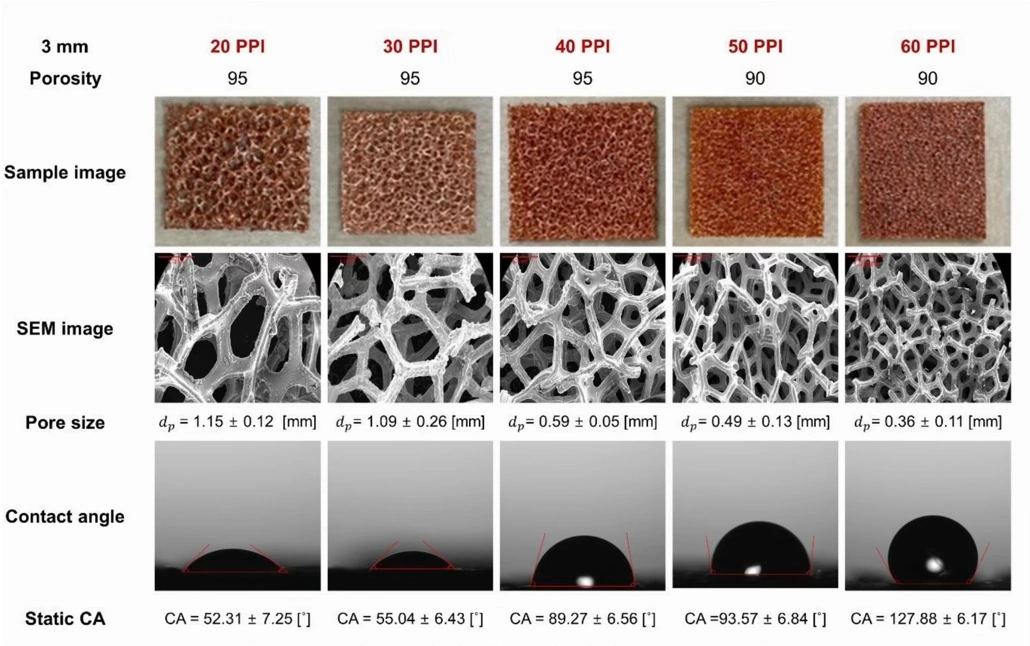
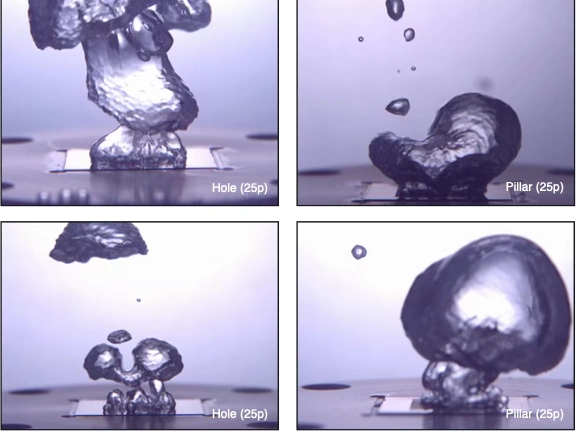
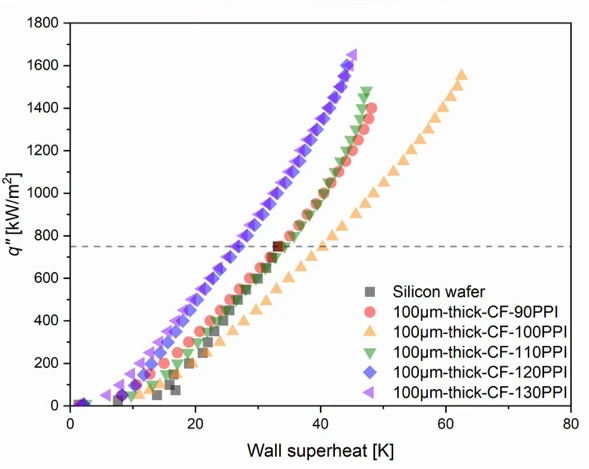
Systematically characterizing the effects of sub-millimeter copper foam pore size, thickness, and orientation on boiling heat transfer. Experimentally demonstrated that metal foam application increases critical heat flux (CHF) by up to 3×.
PUB. #1–#4
CHF Dependence on Surface Orientation
Analyzing the influence of surface orientation and bubble dynamics on critical heat flux over silicon and SiO₂ surfaces. Building predictive CHF modeling foundations essential for immersion cooling system design.
PUB. #2
Gas-Liquid Flow Path Separation Patent
Patented battery immersion cooling system that physically separates gas and liquid flow paths during boiling, maximizing heat transfer performance. Prevents bubble interference to ensure stable cooling operation.
PATENT 10-2855737
FIG. 2.2 — BOILING HEAT TRANSFER & IMMERSION COOLING RESEARCH
02.3 — SMALL MODULAR REACTORS
Small Modular Reactors
Sustainable Power Generation
500 MW+
per campus
SMRs offer compact, reliable baseload power for hyperscale data centers. Microsoft (835 MW), Google (500 MW), and Meta (1 GW) demand concentrated power that renewables alone cannot supply—three compact SMRs vs. 4,175 hectares of solar panels.
Complementary Energy Sources
Solar
Needs intermittency support
Wind
Baseload limitations
SMR
24/7 reliable baseload
SMR Advantages
Passive Safety
Natural circulation cooling, no external power needed
Modular Build
Factory-fabricated, drastically shorter construction
Land Efficiency
1/10 footprint of conventional nuclear for same output
Cogeneration
Simultaneous electricity and direct heat utilization
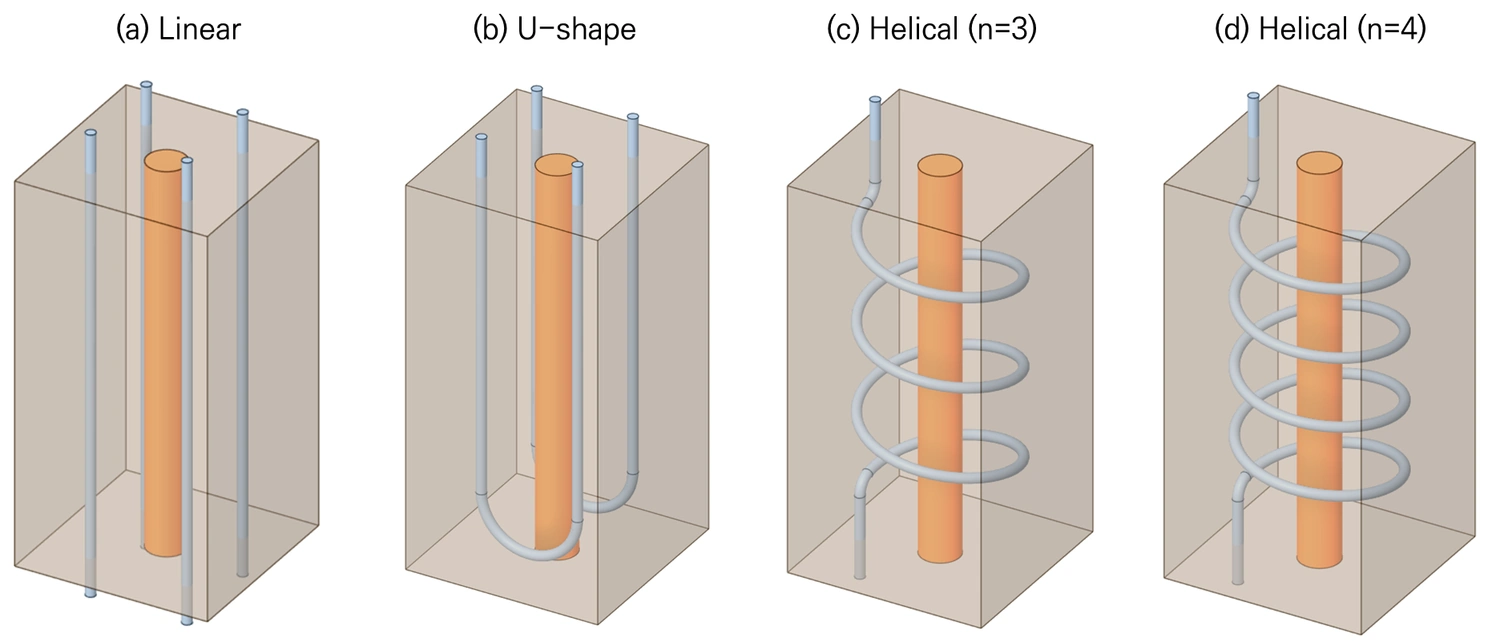
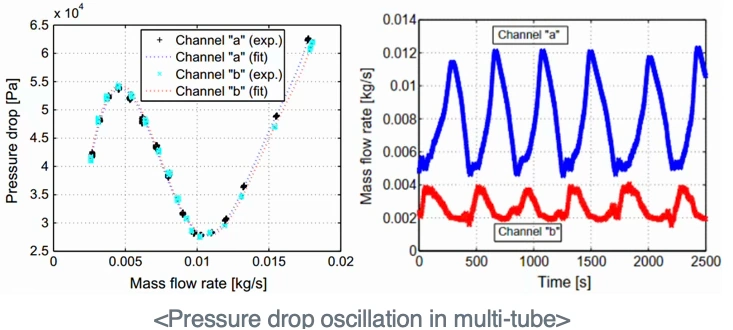
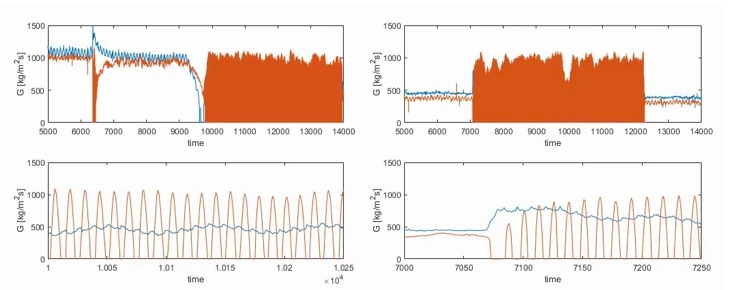
Multi-phase flow physics is at the heart of SMR design. Two-phase flow in helical coil steam generators, natural circulation stability, and condensation heat transfer in containment during accidents—all are core competencies of MFTEL.
MFTEL Research Activities
Core Safety Validation for Multiple-Failure Accidents
Validating core safety issues against strengthened technical criteria and developing technology to improve core safety during multiple-failure accidents. A long-term flagship project covering natural circulation cooling, two-phase flow instability, and accident progression analysis.
NRF, 2022–2029
Next-Gen SMR Safety Enhancement Design
Global human resources training project for securing key design technologies for next-generation SMR safety. Training specialists in passive safety systems, helical steam generator thermal-hydraulics, and containment cooling—all SMR-specific multi-phase flow phenomena.
KETEP, 2024–2025
Containment Condensation Heat Transfer
Characterizing the effect of noncondensable gases on condensation heat transfer in steam-air mixtures. Experimentally analyzed heat transfer degradation mechanisms by light noncondensable gas (hydrogen) and gas stratification phenomena.
PUB. #5, #8, #12
External Reactor Vessel Cooling (ERVC)
Numerically evaluating thermal-hydraulic characteristics of ERVC in high-power reactors. Developed CFD-aided natural circulation flow rate estimation to quantitatively assess ERVC coolability limits.
PUB. #7, #9
FIG. 2.3 — SMR & FLOW STABILITY RESEARCH
02.4 — METHODS
EXPERIMENTS
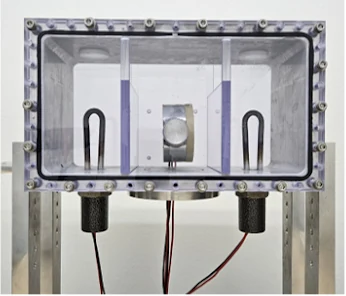
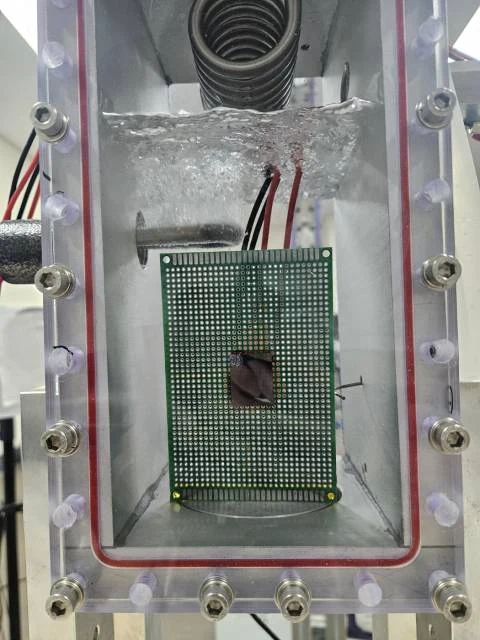
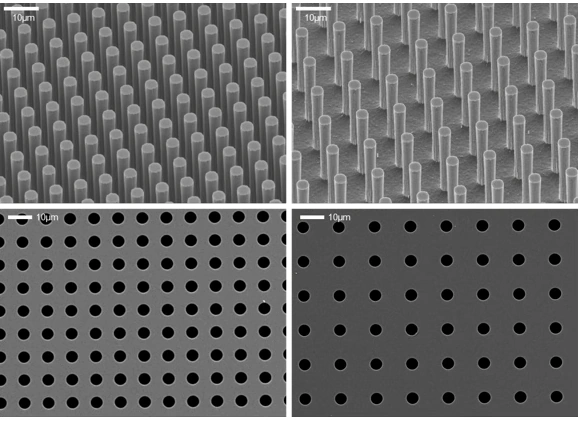
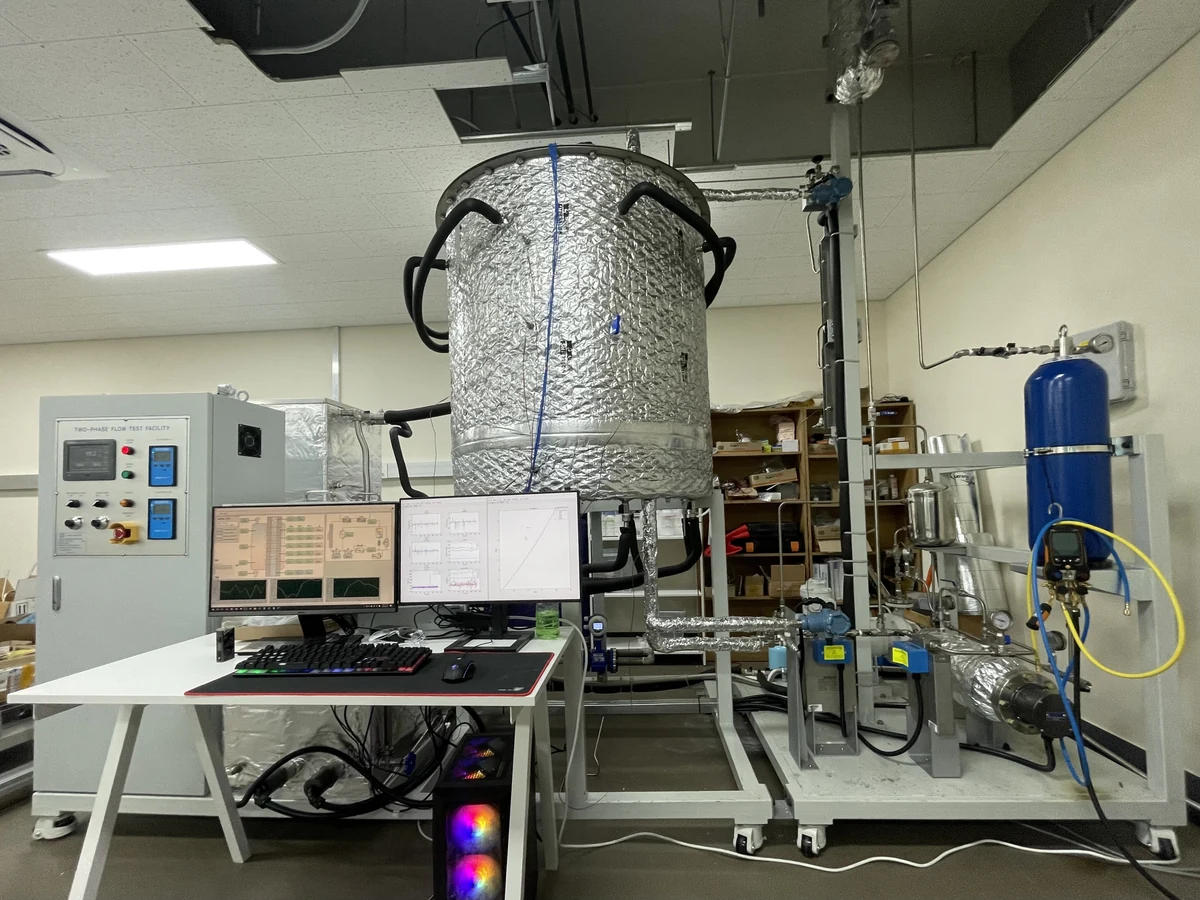
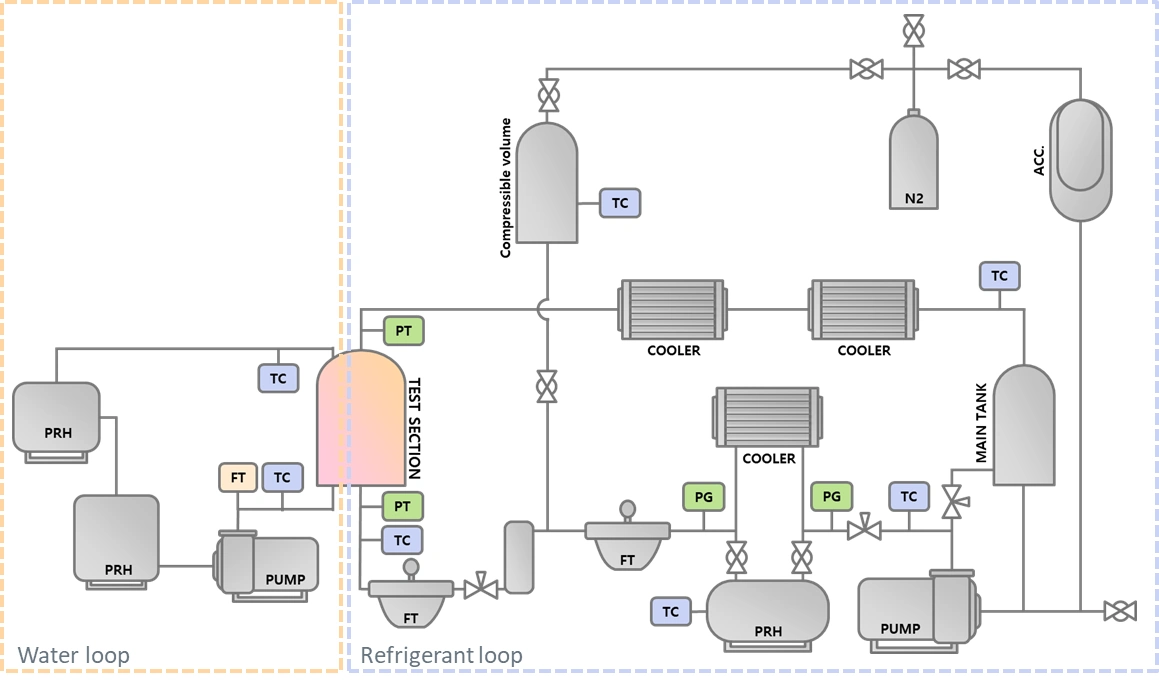
Two-Phase Flow Instability · Pool Boiling Heat Transfer · Flow Boiling Heat Transfer · Thermal Margin Test · Dielectric Fluid · Leidenfrost Effect · Wettability · Condensation